

Pregunta a cualquiera sobre el chocolate de lujo, y Bélgica probablemente sea uno de los primeros países que venga a la mente.
Desde marcas icónicas como Leonidas y Godiva, hasta artesanos boutique, Bélgica alberga más de 2,000 tiendas de chocolate que ofrecen todo tipo de chocolate que puedas imaginar. Conocida mundialmente por su chocolate de alta calidad y lujo, Bélgica se sitúa orgullosamente en el corazón de la cultura mundial del chocolate.
¿Pero qué es exactamente lo que hace que el chocolate belga sea tan especial?
-
Cacao Puro: El chocolate belga debe estar hecho de 100% manteca de cacao, sin grasas vegetales añadidas ni sustitutos artificiales.
-
Ingredientes de Alta Calidad: El chocolate belga se enfoca en usar solo los mejores y más frescos ingredientes, desde los granos de cacao, hasta la leche y la crema, y los sabores naturales.
-
Molidos Extra Finos de Cacao: Los chocolateros usan molinos premium para hacer que su polvo de cacao sea extra fino, lo que hace que el chocolate belga sea notablemente suave y cremoso.
-
Mínimos Aditivos: El chocolate belga prioriza ingredientes naturales sobre sabores artificiales y conservantes.
-
Innovación: Los chocolateros belgas no temen ser creativos. Entre los clásicos, a menudo encontrarás muchos sabores y texturas de chocolate audaces e inesperados.
Historia del Cacao en Bélgica
El cacao llegó a Bélgica en 1635. En ese momento, Bélgica estaba ocupada por los españoles, quienes fueron los primeros en traer el cacao a Europa desde las Américas. Como en muchos países europeos de la época, el cacao era un símbolo de lujo y se disfrutaba principalmente por los ricos y nobles en forma de bebida caliente. El chocolate también se usaba como una forma de medicina y a menudo era vendido por farmacéuticos como un tónico.
A medida que la popularidad del chocolate creció, Bélgica rápidamente se convirtió en líder en innovación y excelencia chocolatera. A finales del siglo XIX y principios del XX, Bélgica dio origen a varios chocolateros icónicos:
-
Neuhaus (1857): El farmacéutico suizo Jean Neuhaus abrió una farmacia en Bruselas, usando chocolate para cubrir el sabor amargo de la medicina. Su medicina de chocolate fue tan popular que eventualmente centró su atención en la fabricación de chocolate.
-
Côte d’Or (1883): Se abrió una pequeña tienda de chocolate en Bruselas, y se registró el nombre “Côte d’Or”, refiriéndose a la “Costa de Oro”, otro nombre para Ghana en ese tiempo.
-
Callebaut (1911): Octaaf Callebaut comenzó su empresa haciendo barras de chocolate en la fábrica cervecera de su familia. Los chocolateros y panaderos apreciaron el chocolate de alta calidad de Callebaut, y la empresa pronto se convirtió en el principal proveedor de productos de cacao para chocolateros y panaderías.
-
Leonidas (1913): Leonidas Kestekides comenzó su carrera vendiendo granita (un tipo de sorbete) en Turquía cuando era niño, y luego se mudó a Nueva York para convertirse en confitero. Allí se enamoró de una mujer belga, se casaron y se mudaron a Gante, donde comenzó su legado como chocolatero de lujo.
-
Godiva (1926): Comenzó como un negocio familiar dirigido por un padre y sus hijos, con un nombre inspirado en la leyenda de Lady Godiva. Godiva fue posteriormente nombrada chocolatera oficial de la Corte Real de Bélgica.
También es importante reconocer el papel de la historia colonial de Bélgica en su historia del chocolate. La creciente demanda global de cacao impulsó a los países europeos a establecer plantaciones en sus colonias africanas. Bélgica expandió la producción de cacao en lo que ahora es la República Democrática del Congo (RDC), entonces controlada por el Rey Leopoldo II.
Aunque el Congo solo producía una pequeña cantidad del cacao belga, el Rey Leopoldo II esperaba que la RDC se convirtiera eventualmente en líder mundial en producción de cacao.
La explotación del pueblo congoleño y de la naturaleza era común, y aunque la RDC nunca se convirtió en un gran productor de cacao, la explotación dejó cicatrices profundas y duraderas en la tierra y la gente del Congo, cicatrices que aún se sienten hoy.
Chocolates Populares en Bélgica
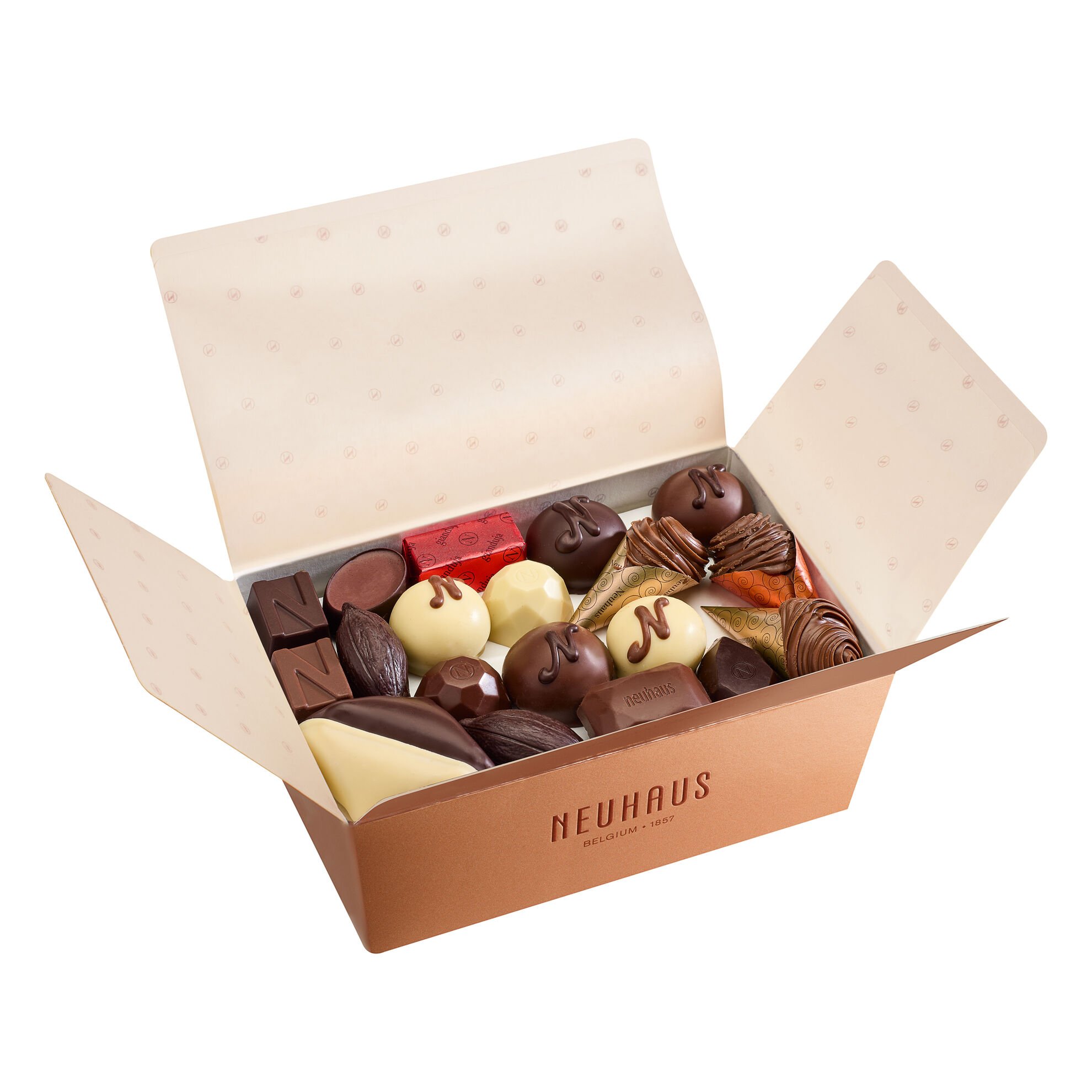
Pralinés y Bombones
En 1912, el nieto de Jean Neuhaus, Jean Junior, inventó el chocolate más famoso de Bélgica, el praliné. Jean Junior se inspiró en la medicina cubierta de chocolate de su abuelo, reemplazando la medicina amarga con rellenos sabrosos. Y así nació el praliné (también llamado bombón): chocolates rellenos con centros cremosos y saborizados.
En ese tiempo, el chocolate a menudo se vendía en conos de papel. Pero resultó que eran demasiado frágiles para proteger los delicados pralinés. Entonces vino la invención del ballotin: una elegante caja de regalo diseñada por la esposa de Jean Junior, Louise Agostini, que sigue siendo usada por Neuhaus y otros chocolateros hoy en día.
Conchas de Chocolate Guylian
Otro ícono del chocolate belga es la concha de chocolate: chocolates con forma de concha marina, marmoleados en chocolate oscuro, blanco y con leche, con un relleno cremoso de avellana en su interior.
El chocolatero belga Guy Foubert y su esposa, Liliane, abrieron su tienda de chocolate Guylian en 1938. 30 años después, tras regresar de unas vacaciones relajantes en la costa belga, tuvieron la idea de hacer souvenirs de chocolate inspirados en el mar. Crearon once moldes únicos de chocolate, los llenaron con delicioso praliné de avellana, y el resto es historia.
Hoy, sus icónicos chocolates con forma de concha y caballito de mar se venden en más de 100 países alrededor del mundo.
Lo que depara el futuro
Bélgica es conocida mundialmente por su enfoque innovador y centrado en la calidad del chocolate.
En los últimos años, se ha prestado más atención a la sostenibilidad de la producción de cacao. Beyond Chocolate es una asociación que impulsa una industria del chocolate belga más sostenible y ética. Actualmente, más del 90% de los fabricantes de chocolate belgas son socios de Beyond Chocolate.
Estas empresas se comprometen a producir chocolate trazable y de origen ético, e invierten en prácticas agrícolas sostenibles. ¿El objetivo? Que todo el chocolate en Bélgica se produzca usando solo cacao sostenible.
El chocolate en Bélgica ha recorrido un largo camino desde que fue introducido hace 400 años. Lo que comenzó como una bebida exótica ahora es el souvenir imprescindible para todo turista que visita Bélgica.
A medida que el futuro del chocolate avanza hacia un sistema más ético y amigable con el planeta, Bélgica está justo en la vanguardia. Y nos encanta verlo.

 1.5 - 2 horas
 Mediano


