
“Cocoa has a history,” Estela Lázaro says, looking out at the surrounding rainforest. Yellow cocoa pods among a mix of fruit and timber trees can be spotted all around as she speaks, hanging within arms reach.
“Our chocolate has a history. A lot of effort, love, passion.”
This was the final farm on our journey to Mexico, La Campesina Del Cacao in Tecolutilla, Tabasco.
And at La Campesina, effort, love and passion is exactly what you find. You don’t just see where cocoa grows — you experience a culture it belongs to. The leader of the collective and a powerhouse of knowledge, Estela Lázaro, or Doña Estelita as she’s affectionately called, welcomes visitors to a world where cocoa is much more than a crop. It’s a symbol of heritage, resilience, and a way to a better future.
Cocoa Gastronomy
Estelita is a third generation cocoa farmer with a deep spiritual connection to the land that surrounds her. And to cocoa. Working together as a collective with eight women and four men, Estelita leads La Campesina — a cooperative dedicated to preserving the heritage of cocoa and its role in the traditional gastronomy of Tabasco.
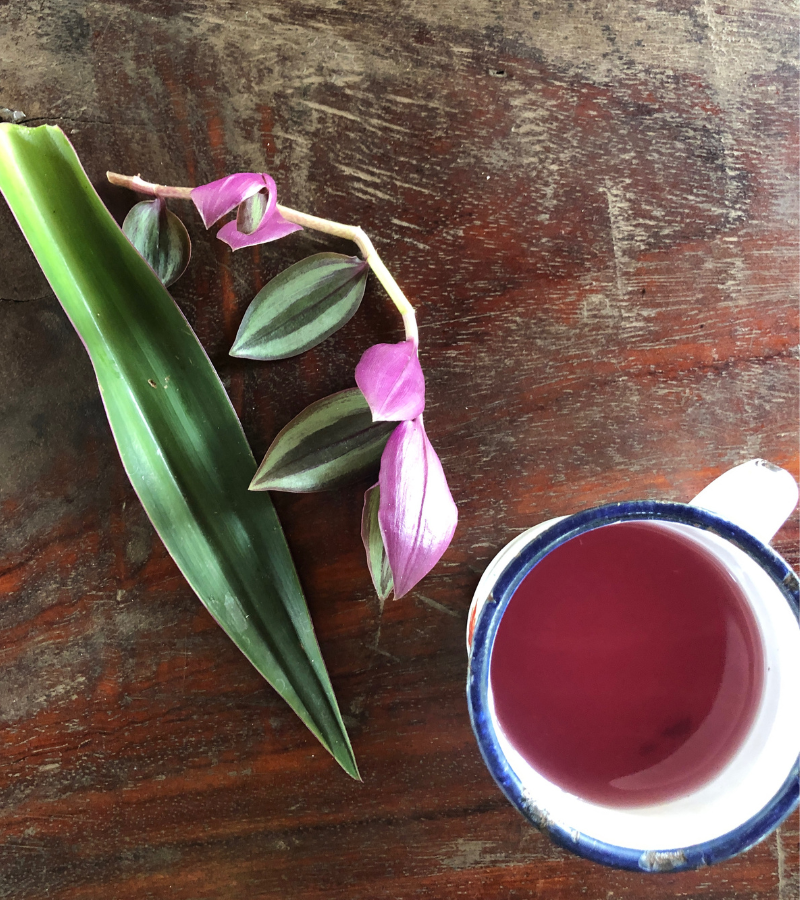
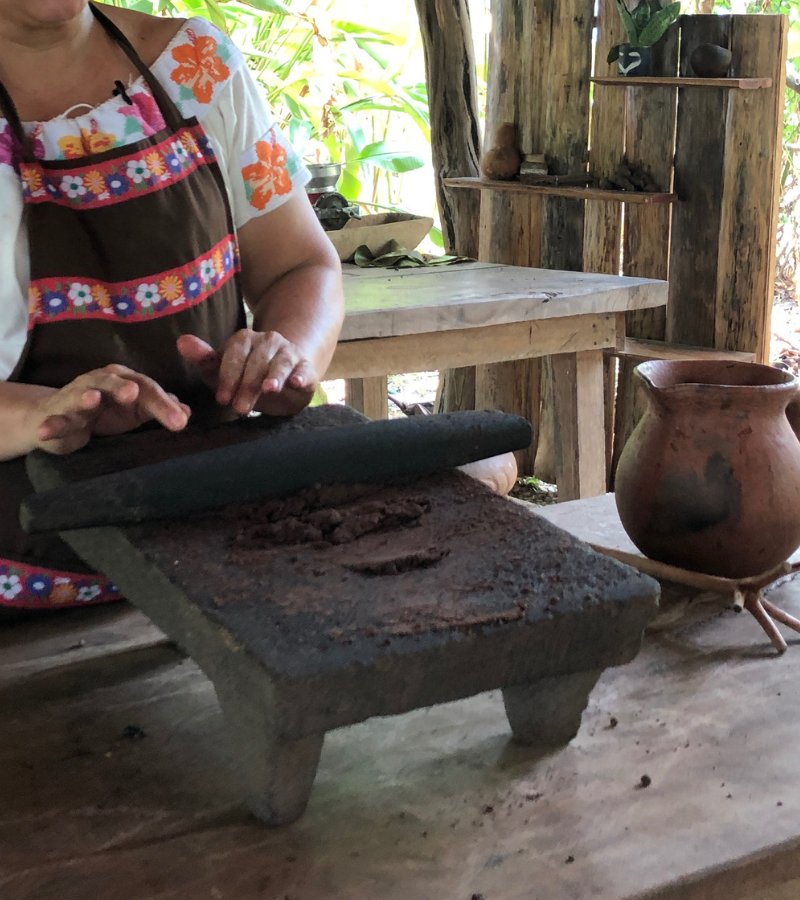
When you visit La Campesina, you see this heritage in action. Estelita welcomes guests into her open kitchen, where she prepares farm-to-plate dishes using traditional Tabascan methods. She grinds cacao by hand, roasts the beans over a comal, and makes drinks like Charote and Chocolate al Agua – all while sharing the stories behind each recipe and ingredient.
“We want to share the authentic flavours of cacao with the world,” says Estelita.
For her, cocoa isn’t just a crop. It’s part of her family’s story, her community’s identity, and a tradition she is determined to keep alive for future generations.
The Farm as a Forest
For Estelita, cocoa farming is a conversation with the land. The cacao trees don’t stand alone here. They grow surrounded by fruit trees, shade trees, and fragrant herbs. This approach, called agroforestry, mimics the structure of a forest. It’s a method that doesn’t just produce delicious cacao — it creates habitats for monkeys, squirrels, and countless species of birds.
At La Campesina, every planting decision, every compost heap, every sip of cacao is a step toward protecting the land that has sustained generations.
But today, the rains don’t come as reliably as they used to. Rising temperatures have reshaped the planting and harvest cycles, and farms all around are burning their organic waste, only worsening conditions.
Each year is a challenge, Estelita admits. But she’s putting in the work to show the world there’s a way forward — leaning into the ancient knowledge of the land and pairing it with innovative regenerative farming practices.
The Key to Better Farming
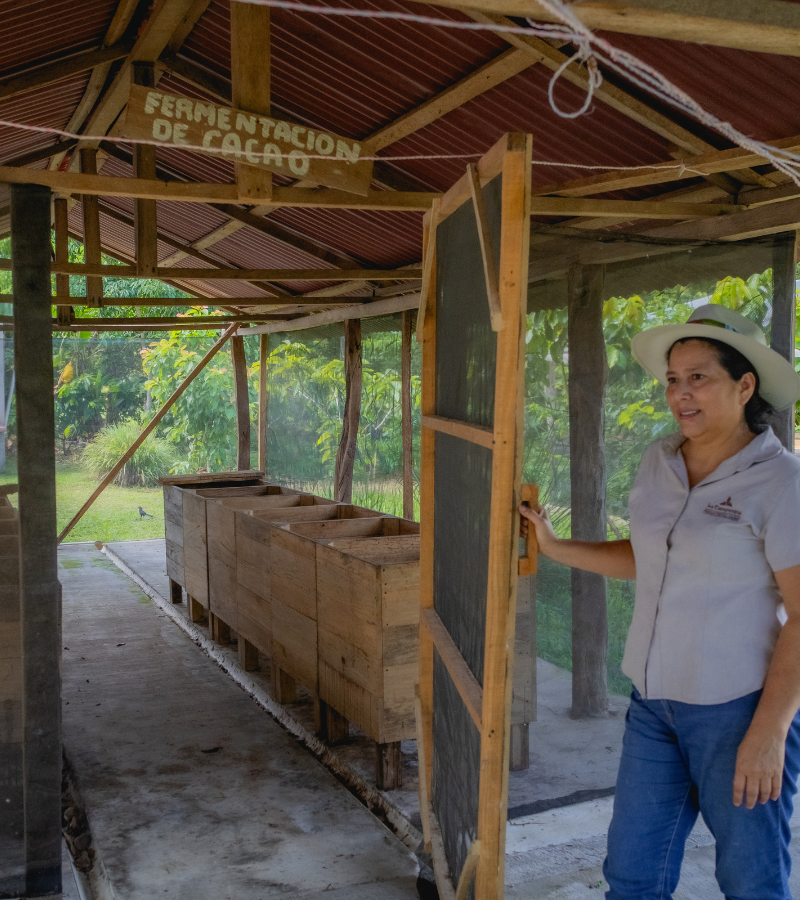
Through composting, biofertilizers, and a strict no-chemicals approach, she and her team have kept the farm productive and balanced. The results? A healthy cacao crop and a living example for others in the region.
Estelita puts the spotlight on one plot in particular that flourished after a dose of her organic, regenerative care.
“Many temperatures were tremendous, but the cocoa trees did not die,” she says, “rather they remained there and right now at this moment they are flowering.”
It’s these learnings that give cocoa farmers, and those watching, hope. But Estelita isn’t keeping her lessons to herself. She’s spreading the word so that farmers around the country, and even the world, can also learn from her experience.
“It is an exhibition that reaches many universities, it reaches many schools to see what we are doing to take care of the environment and it is a source of inspiration for others, both other farms as well as the generational change,” says Estelita.
“That, well, to me personally gives me great joy.”
Sharing Knowledge Through Food
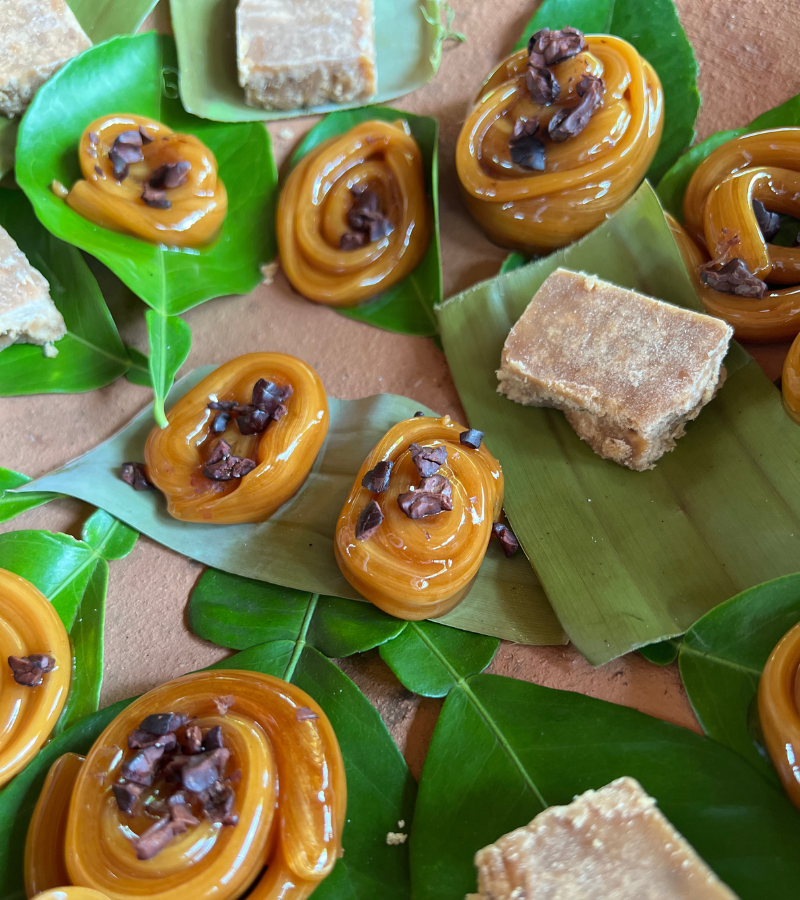
La Campesina is more than a farm. It’s a cultural and gastronomic center where visitors can learn the heritage of cacao and the role it plays in Tabasco’s cuisine. From making traditional drinks like Chocolate al Agua to roasting cacao over wood fires, it’s an experience for the senses.
Her passion? To share cocoa dishes and drinks that tell a story, one of history, rare knowledge, and the true flavours of cocoa to chocolate.
Through workshops, farm tours, and tastings, La Campesina is shaping a future where cacao is both a delicious treat and a beacon of sustainability.
Lessons From La Campesina
For those who walk the paths of La Campesina, the takeaway is clear: Give to the land and it will give back. Honour heritage and it will reward the future. Estelita reminds us that agriculture can be regenerative, and this is the way forward — growing food while nurturing forests. Here, resilience is built one seed, one tree, one lesson at a time.
Join us in supporting @lacampesina become a model for the future. Watch Estelita’s story — live now in Episode 9.


