

Cacao beans are the starting point of every chocolate bar, brownie, and cup of hot cocoa. But what are cacao beans really, how are they grown, and what are cacao beans used for? This guide explains everything in simple, clear terms so you can understand where great chocolate begins and how to choose cacao that is ethical and high quality.
What are cacao Beans, exactly?
Cacao beans are what you find inside the colourful pods that grow on the cacao tree. Each pod contains about 20 to 60 beans surrounded by sweet white pulp. These beans are the raw form of what eventually becomes chocolate.
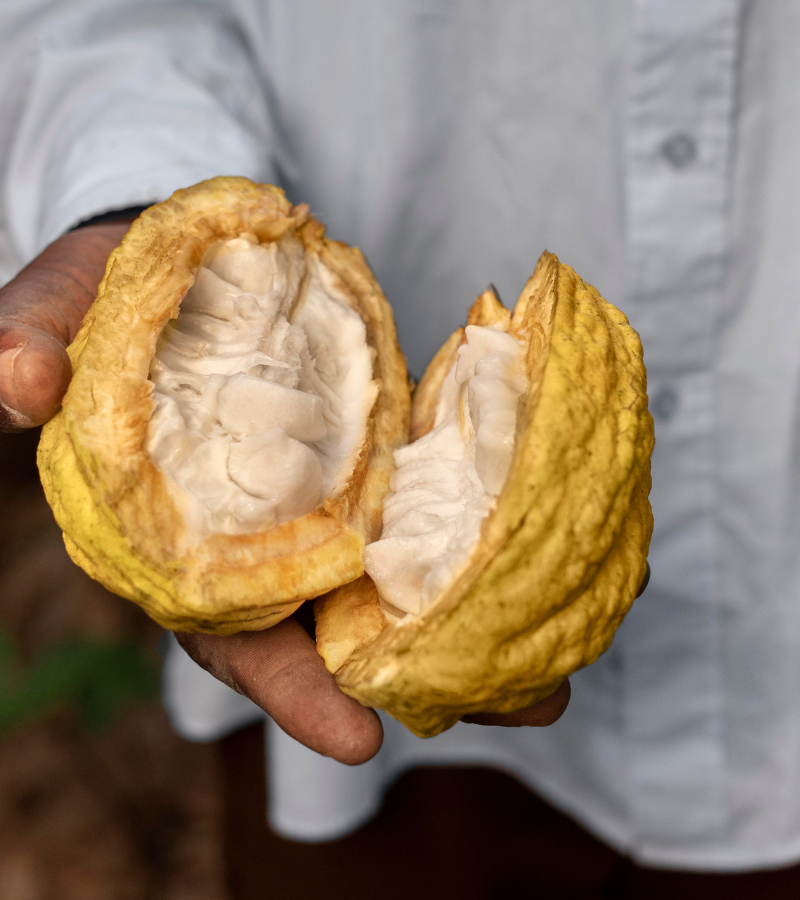
Now that you know where cacao beans come from, you might be wondering… so what is a cocoa bean?
The words “cacao” and “cocoa” are often used interchangeably, and sometimes they do mean the same thing. But not always. In everyday use, cacao usually refers to the raw or minimally processed form, like beans straight from the pod. Cocoa, on the other hand, typically describes beans that have been roasted and processed into familiar forms like cocoa powder or chocolate.
Cacao beans matter because they shape every part of chocolate’s flavour. The genetics of the tree, how the beans are fermented, and how they are roasted all influence the aroma, texture, and quality of the final product.
What Are Cacao Beans Made Of?
Cacao beans contain two main components:
Cocoa solids: The non-fat part of the cacao bean. These create the deep chocolate flavour and contain natural antioxidants called flavanols.
Cocoa butter This is the natural fat inside the bean. It gives chocolate its smooth melt and silky texture.
As the beans move through fermentation and roasting, they develop hundreds of tiny flavour compounds. Together, these shape the final personality of chocolate, from bright and fruity to warm and earthy.
Where Do Cacao Beans Come From?
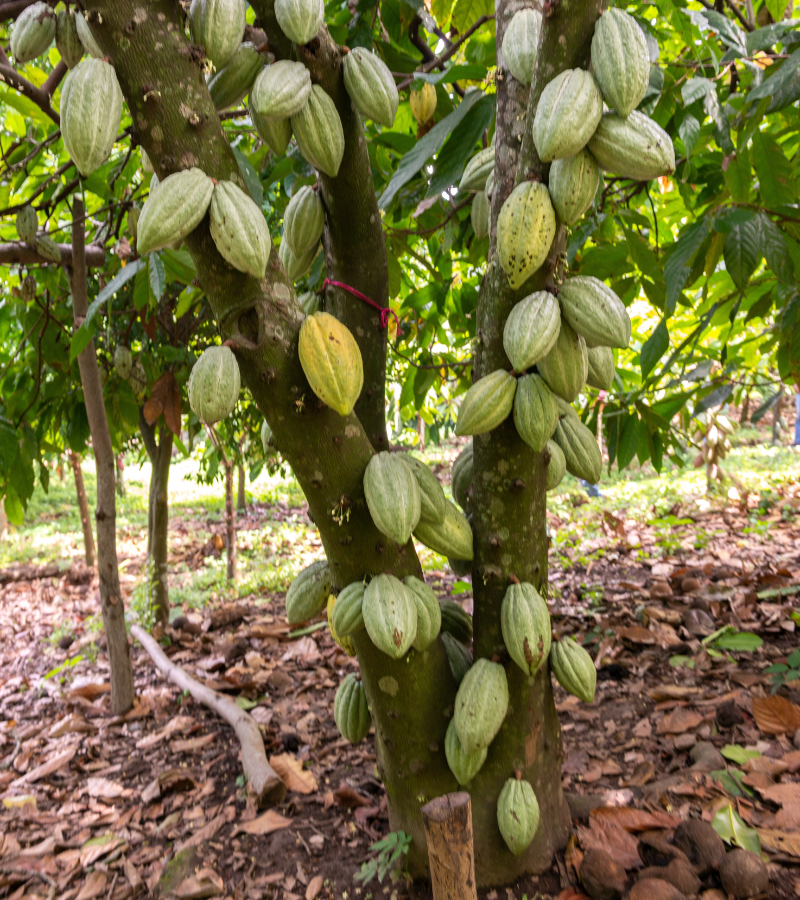
Cacao grows on the Theobroma cacao tree, a tropical plant that thrives in warm, humid climates. You’ll find it near the equator in West Africa, South America, Central America, and Southeast Asia. These regions are home to some of the most cocoa producing places in the world and some truly distinctive flavour profiles.
Most cacao is grown by smallholder farmers who tend a few hectares of land. Their work supports global chocolate production, yet they often face financial pressure, climate challenges, and unstable markets. Choosing ethically sourced cacao helps support farming communities and encourages sustainable practices.
How Cacao Beans Are Processed (The Short Version)
Growing cacao is definitely a journey, and it takes time and care. After harvesting, fresh beans move through key stages that turn those soft, white seeds into the deep chocolate flavour we all know and love. The bean process involves fermentation, drying, roasting, cracking and winnowing, and finally grinding the nibs into cocoa mass, cocoa butter, or cocoa powder.
Each stage influences the final taste and aroma of the bean. If you want to explore the steps in more depth, you can read our full guide on cacao bean processing, which also covers the best practice for each step.
What Are Cacao Beans Used For?
Cacao beans can be transformed into many different products and used in a wide range of foods and traditions.
Chocolate Production
Chocolate is the big destination for most cacao beans. Roasting and grinding unlock their aroma, and the quality of the bean shapes everything from sweetness to depth.
Cocoa Powder and Baking
Cocoa powder comes from the roasted and pressed solids of the cacao bean. It is one of the most common everyday ingredients and appears in cakes, brownies, cookies, hot cocoa, and countless desserts. Some cocoa powders are also Dutch processed, a gentle alkalising step that creates a darker colour and a smoother, milder flavour.
Though both come from the same bean, cocoa powder is not the same as cacao powder. It behaves differently in baking and drinks due to the way it is processed.
Cacao Nibs and Whole Beans
Not as mainstream, but just as tasty, cacao nibs add crunch and rich chocolate flavour to smoothies, yogurt, and baked goods. Whole beans can be roasted and enjoyed as a strong, earthy snack or ground for homemade creations.
Traditional Drinks and Cultural Uses
For thousands of years, cacao has been used in drinks across Central and South America. These range from ceremonial preparations to regional recipes still enjoyed today. Many of these drinks use cacao in its pure, unsweetened form, giving a taste of chocolate’s earliest roots.
Benefits of Cacao Beans
Cacao beans are valued for their blend of taste and natural compounds.
Nutritional benefits
Cacao is high in many important minerals such as magnesium, potassium, and iron, which is why it is often celebrated as a nutrient dense superfood. There are also many gentle, everyday ways to include cacao in a healthy lifestyle, from small morning rituals to simple snacks.
Mood and cognitive benefits
Natural compounds like theobromine and flavanols can support alertness and a sense of calm focus.
Ethical benefits
Choosing ethically sourced cacao supports fairer conditions for farming communities and encourages sustainable land management.
Cacao vs. Cocoa: What’s the Difference?
Cacao refers to the raw or lightly processed form such as beans, nibs, or raw cacao powder. It usually keeps more of its original nutrients.
Cocoa refers to more processed or roasted versions such as cocoa powder or mass market chocolate.
The difference between cocoa and cacao matters because less processed cacao has a brighter flavour and may retain more of its natural compounds. Cocoa products can be smoother and more accessible for everyday baking and drinks.

How to Choose High-Quality, Ethically Sourced Cacao
Here is what to look for when choosing cacao products:
Single-origin: this means beans come from one region, which results in a clearer flavour profile.
Transparent supply chains: look for brands that show where their cacao comes from and how farmers are treated.
Proper fermentation: well fermented beans produce rich, balanced chocolate.
Support for farming communities: ethically sourced cacao helps create better livelihoods and encourages sustainable farming.
Sustainability and regenerative impact: Choosing responsible cacao supports farming systems that protect soil health, biodiversity, and long term land resilience. We work with partner farms across Mexico and Bolivia , which put regenerative practices at the heart of their growing.


