
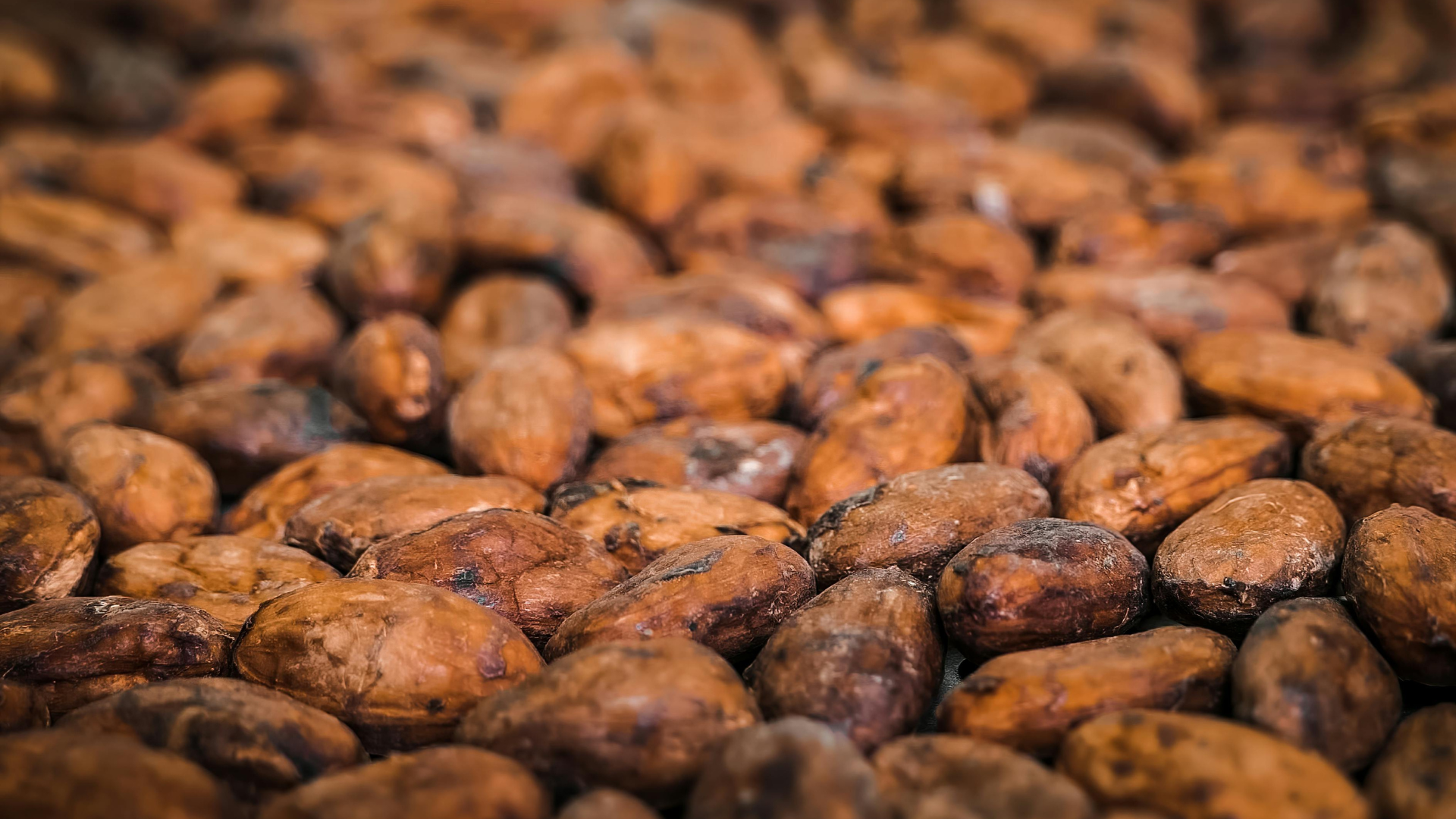
Where the magic from cocoa to chocolate begins: roasting the beans.
Ever tasted raw cacao and wondered how such an intense bitterness could possibly transform into the mellow, rounded flavour you know as chocolate? It starts with roasting.
Once grown and harvested, fermented and dried, cocoa is roasted. This is done by heating the fermented and dried beans at controlled temperatures to bring out their rich flavour and aroma while reducing bitterness. This is when the flavours of chocolate truly come to life.
Ready to dig in? Let’s explore why roasting matters, the different roasting styles, and how artisans turn simple beans into pure cocoa magic.
The history of roasting dating back 3,500 years
Believe it or not, people have been roasting cocoa for thousands of years. The Olmec civilisation in southern Mexico were the first to ferment, roast, and grind cacao beans around 1,500 BCE, that is 3,500 years ago! They used the ground cacao to make thick, rich drinks for ancient cacao ceremonies.
Over time, the Maya and other Mesoamerican cultures refined the process. Starting with open-fire roasting, to soften bitterness and bring out deeper, more complex flavours. When cacao reached Europe in the 1500s, Europeans adapted those roasting traditions to suit their own tastes.
Centuries of trial and error shaped the roasting techniques we use today. Now, roasting is both a science and an art. The temperature, timing, and method all affect how the beans taste, smell, and feel.
Why roasting is essential
Why are cocoa beans roasted? Well, it’s where the magic happens. Roasting smooths out acidity, deepens the flavour, and coaxes out those rich chocolatey notes we all love. During roasting, the Maillard reaction kicks in, the same science that makes toasted bread or roasted coffee smell so good. It’s what gives cocoa its nutty, caramelised aroma and warm, complex taste.
Without roasting, cocoa would taste flat and tangy, missing all those subtle fruity, nutty, and floral hints hidden inside each bean. In short, roasting transforms raw potential into chocolate perfection.
Step-by-step explained
Roasting cocoa is a true craft with many ways to get it right. From traditional drum roasting to hot-air and small-batch approaches. We break the process down step by step, so you can see how time, temperature, and technique shape every bean’s final flavour.
1. Farming, selecting, fermenting and drying
Great roasting starts with great beans. Plump, well-shaped, and uniform beans have the best potential to develop rich flavours. Each bean should be perfectly ripe when harvested, properly fermented, and dried before it reaches the roaster.
At The Cocoa Circle, we partner with farmers who pour care into every one of these steps. Want to get some more insights? Check out our trip to Finca Las Delias farm in Comalcalco, Mexico! Cocoa farmer Alma walked us through the art of selecting the perfect cocoa bean while filming her story of becoming a cocoa farmer.
2. Which roasting method to choose
When it comes to roasting, there’s more than one way to bring out the magic in cocoa beans. Farmers and chocolatiers choose between several methods. Each has its own personality and leaves its mark on the flavour:
Traditional drum roasting: Beans tumble inside a large rotating drum that’s heated from the outside. This method gives a deep, even roast and brings out the familiar, rich chocolate aroma we all know and love. The movement and direct heat help caramelise the sugars and create those classic cocoa notes.
Hot air roasting: Beans are roasted by hot air blown around them, rather than direct contact with a drum. This produces a more controlled, uniform roast with brighter, more delicate flavour notes, letting the bean’s fruity and nutty characteristics shine through.
Small-batch or craft roasting: Some producers use stovetop pans or ovens at home, ideal for experimenting with lighter, medium, or darker profiles. This hands-on approach lets you really explore how time and temperature shape the chocolate’s character.
3. Temperature and Time
Roasting temperatures usually range between 120°C and 160°C, depending on the desired flavour profiles. Roasting times vary from 15 minutes to over an hour, with artisanal batches often lasting 15 to 45 minutes, while larger-scale or mass-market processes can take 20 minutes to two hours.
4. How to tell they are done
Roasted too lightly? The flavours stay underdeveloped. Roasted too deep? Bitterness takes over.
A perfectly roasted bean looks, smells, and feels just right. It should have a glossy brown colour, a balanced, fragrant aroma, and a brittle texture when cracked open.
5. Cooling & peeling
After roasting, the beans need to cool down quickly to stop the cooking. Then comes the fun part: the outer shell is peeled away to reveal the nib inside, packed with concentrated cocoa solids and cocoa butter, ready to be turned into chocolate or cocoa powder.
6. Grinding into nibs
From here, the roasted nibs are ready to shine. They’re ground down, releasing their natural cocoa butter and rich flavours, ready to become everything from crunchy cocoa nibs to silky cocoa powder, or your next baking creation.
P.S. Need recipes? We’ve got you: check out over 80 chocolate and cocoa recipes. Your next chocolate adventure awaits!
Fun fact: When it comes to delicious cocoa powder, some cocoa producers take the process a step further with alkalising or Dutch-processing. We choose to Dutch-process our Cocoa Powder for baking for a smoother, richer flavour.
Effects of the Roast
Roasting unlocks the complexity of the bean. Light roasts bring out more crisp, fruity notes. Medium roasts bring gentle toasted warmth and balanced flavour, and full roasts emphasise more bold, nutty richness.
Since pure cacao beans are filled with antioxidants and minerals, you might wonder: does roasting impact cacao’s naturally packed nutrients?
Roasting cocoa beans can slightly lower some of their nutrient levels. Specifically the polyphenols, the compounds behind much of cacao’s antioxidant power. How much is lost really depends on the roasting style. Traditional high-heat roasting can reduce polyphenols quite a bit, while lighter methods, like oven roasting, help preserve more of their goodness.
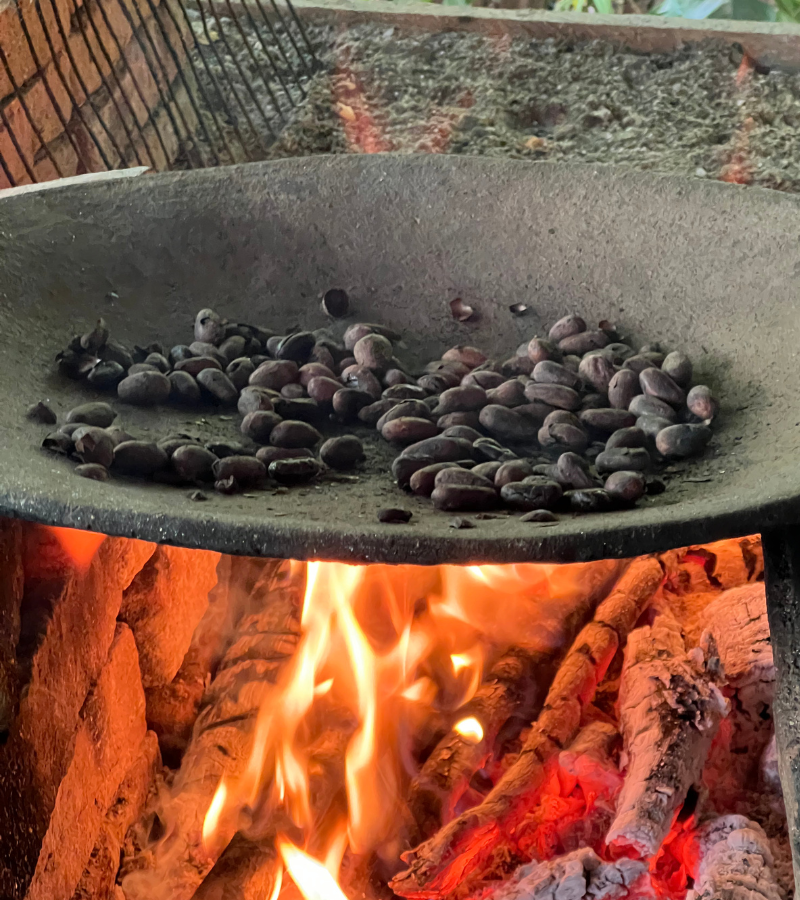
the question remains: to roast or not to roast?
There’s no right or wrong here. It’s just about what you’re looking for. Roasting is the step in the cocoa cultivation process that determines whether the beans are destined for products favouring flavour and joyful bakes, or products favouring health and wellbeing. It’s the difference between cocoa and cacao.
At The Cocoa Circle, we believe in a balance. Which is why we offer both.
Featuring our Cocoa Powder and collection of cocoa drops, our baking range is designed to bring out the best in your baking, using roasted and alkalised cocoa for the smoothest chocolatey flavour.
On the flipside, our health range features Cacao Nibs and Cacao Powder retaining more nutrients and natural bitterness for an energising superfood boost.
Roasting at home!
As you can see, roasting is equal parts art and science. But that doesn’t mean it’s off-limits for home bakers and chocolate lovers.
If you can get your hands on fermented, dried cacao beans (specialty shops or online suppliers are your best bet), why not try roasting them yourself? It’s a sensory adventure, the crackle, the aroma, the slow build of chocolatey magic.
Every bean and every oven behaves a little differently, so think of this as a guideline, not a formula. The goal here is a light to medium roast, enough to develop flavour without burning away the delicate cocoa notes.
Here’s how to get started:
- Preheat your oven to 130°C (266°F). That’s the sweet spot for most home ovens.
- Spread the beans in a single layer on a baking tray.
- Roast for 20–25 minutes, giving them a check (enjoy the aromas) every 5 minutes as the aroma deepens and the colour darkens.
- Smaller beans may roast faster, closer to 15 minutes.
- Larger beans can take up to 30.
- Listen for a gentle crackle and watch the colour: they’ll darken slightly and smell deeply chocolatey, a bit nutty, and warm — that’s your cue.
- Cool the beans completely, then crack and peel off the shells.
- Experiment! Try lighter or darker roasts to find your favourite flavour.
Home roasting is the ultimate hands-on way to see (and taste) the transformation from bean to chocolate. Once you’ve done it yourself , you’ll never look at cocoa the same way again.
Common mistakes when roasting
To avoid throwing off the flavour, even experienced chocolate makers have to be careful during the roasting process. Here are a common mistakes to watch out for:
- Over-roasting: Can make the beans taste burnt and bitter.
- Uneven heat: Some beans may roast too little while others overcook, leaving a mix of flavours.
- Skipping the cool-down: Residual heat keeps cooking the beans, which can change the flavour you were aiming for.
From bean to baking
From bright, fruity notes to deep, chocolatey richness, roasting is what unlocks the magic inside every cocoa bean.
But roasting is just the beginning of the flavour journey. Once your beans are perfectly toasted, the real transformation begins. First comes cracking and winnowing, breaking the beans open to reveal the flavour-packed cacao nibs, the pure heart of cocoa. Then we grind those nibs into a thick, velvety paste known as cocoa liquor (or cocoa mass), chocolate in its most natural form.
From there, the path can go two ways: pressing the liquor to create cocoa powder, or refining and conching it into smooth, glossy chocolate with the cocoa butter left in.
From bean to baking, every step adds flavour, texture, and magic to the final bite.


