
The dermatologists
were right about
the one thing you can't buy
She had the ten-step routine, the €90 retinal, and the silk pillowcase. Her skin still looked tired. She added one step to her night routine, and everything changed.
There's a specific kind of frustration that only happens in front of a well-lit mirror at 7am.
You did everything. Cleanser, essence, the vitamin C, the retinal you're still slightly scared of, the eye cream you pat into your eye bags. Nine steps, some of them expensive, and all of them done every day without fail. But the face looking back at you still looks… tired. Not older, exactly. Just worn.
For the longest time, I assumed the answer was another product. A stronger acid. A better serum. The peptide everyone was posting about. And I have the bathroom shelf to prove how committed I was to that theory.
Then, my dermatologist said something to me that I haven't been able to unhear.
"You can't buy the most important step.
You can only go to bed earlier."
The step that isn't on your shelf
Here's the part the skincare industry isn't telling you, because there's nothing to sell you if you knew the truth: your skin does its actual repair work while you're asleep.
Not while the serum sits on top of it during the day. At night. In the dark, in the late hours of the night, your body quietly goes to work. Cell turnover and barrier repair run on a nightly schedule whether you're paying attention or not. Everything you apply before bed is preparation, but the real work happens after the lights go off.

And the research on this is nothing new.
Axelsson et al. · BMJ · 2010
In a controlled experiment, strangers rated well-rested faces as noticeably healthier and more attractive than sleep-deprived ones.
Sundelin et al. · Sleep · 2013
The same faces were photographed after a night of normal sleep and after sleep deprivation. The tired versions showed hanging eyelids, paler skin, redder eyes, darker circles and more visible fine lines. Again, strangers picked up on all of it.
Oyetakin-White et al. · Clinical and Experimental Dermatology · 2015
Poor-quality sleepers showed more signs of intrinsic skin ageing, and their skin recovered more slowly after being stressed.
The conclusion is clear: sleep is the only skincare with peer-reviewed proof of how it changes the way people see your face. And it's the one thing you can't add to cart.
So why does everyone skip it?
Because it's the one step with no shiny bottle, sleek jar, or trendy brand attached to it. You can't buy it, and you can't just apply it to your skin. And the one time you can get it, bedtime, is the least protected part of your day.
Think about your average evening.
You scroll through emails, the group chat, the one last reel, the blue light just inches from your face. You did the ten-step routine. Then you undid it, and wondered why the refreshed morning face never quite arrived.
What actually changed for me
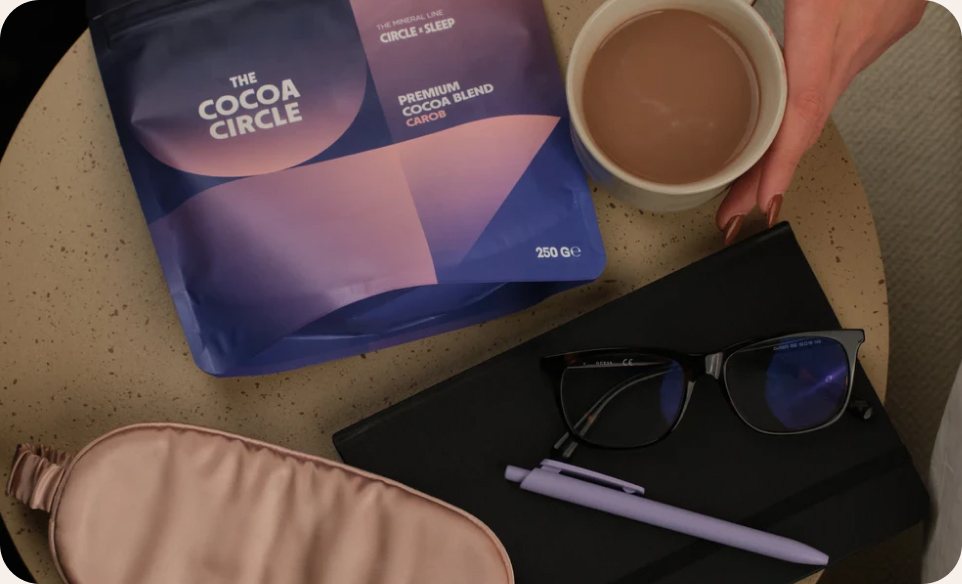
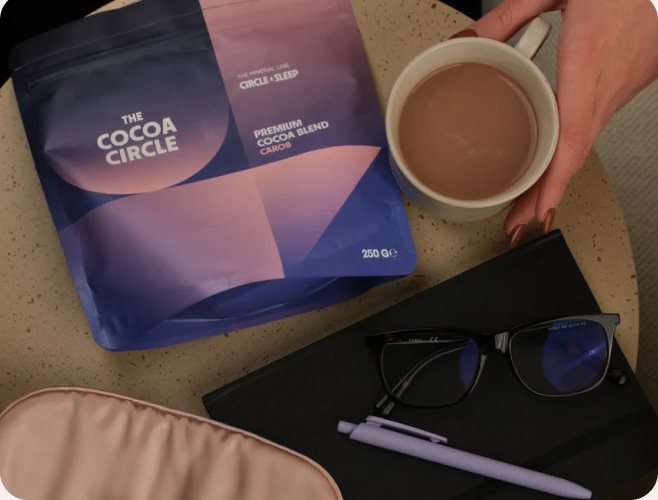
I didn't add a new product to my skincare. I added a cue. Something to mark the end of the day so that my body would actually know when to wind down. A friend who works in wellness handed me a pouch of something called Cocoa Blend and told me:


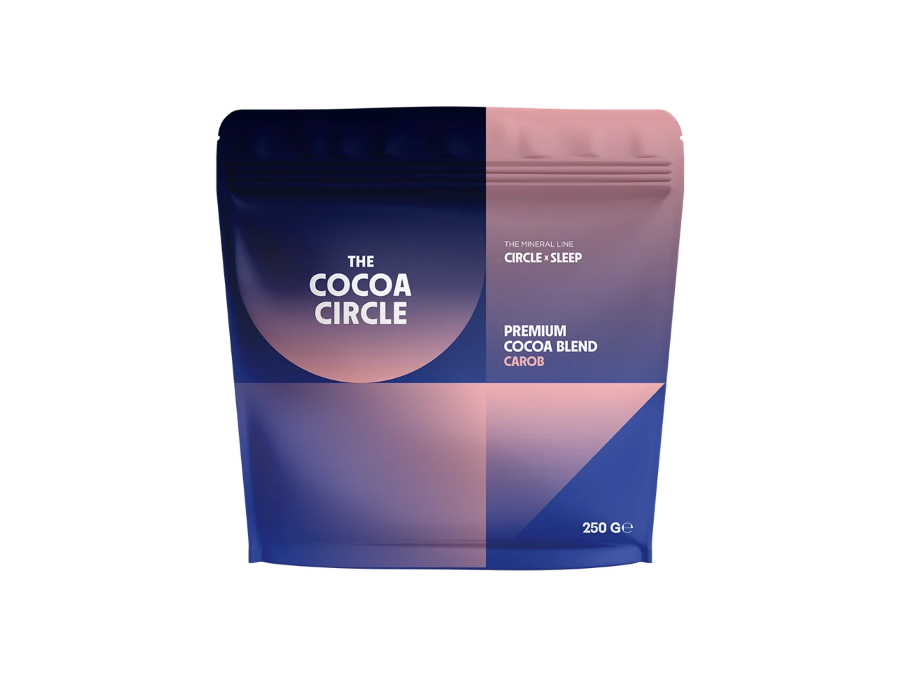
It's an upgraded hot chocolate. That's the best description I can give you. You stir a scoop into hot milk or water, mix it up, and drink it about an hour before bed. You can pick from two flavours: carob or cinnamon. There's no refined sugar. It's sweetened with monk fruit and date, and it tastes, genuinely, like dessert.
Inside it are four sleep-supporting ingredients optimal for the last hour of the day:
I'm not going to tell you these ingredients do anything for your skin, because they don't. And anyone who tells you a drink erased their wrinkles is not being honest with you. But what those ingredients are there to do is help you wind down, so that the sleep that does work on your face has a chance to happen.
Because that's the whole point. No drink will give you healthy skin. Sleep does. The cup just gets you there.


Step ten · Choose your offer
evening cocoa blend, skincare you drink.
Magnesium, L-theanine, reishi and apigenin in a warm cocoa made for the last hour of the day. Carob or cinnamon, sweetened with monk fruit and date.

 Magnesium, L-theanine, reishi, apigenin
-
Naturally sweetened, no refined sugar
-
Tastes like hot chocolate, because it is

 Magnesium, L-theanine, reishi, apigenin

The part I didn't expect
The surprising thing was that it wasn't the ingredients that transformed my nights.
For the first time in years I had a step in my skincare routine that actually felt good. A warm, comforting cup of hot cocoa I hold with both hands, my phone face down on the nightstand. It replaced the doom scroll simply by giving my hands and my attention somewhere better to go. Now, every evening I have ten quiet minutes that tell my nervous system that the day is over.
Slowly, I began seeing results in the mirror. When I stopped sabotaging my nighttime routine, and committed to getting better sleep, it showed up on my skin.
The most expensive product in my skincare routine used to be that serum I barely use. Now I know it was the sleep I wasn't getting.


Let's talk about the price, because I did the maths
The Mineral Line is €49,95 a pouch, and my first reaction was: that's a lot for a hot chocolate.
Then I worked out what it actually is. One pouch is about thirty evenings of cocoa. That's just €1,66 a night, less than a cup of coffee a day. And it's the thing I look forward to every evening.

€49,95
A pouch

30
Evenings

€1,66
A night
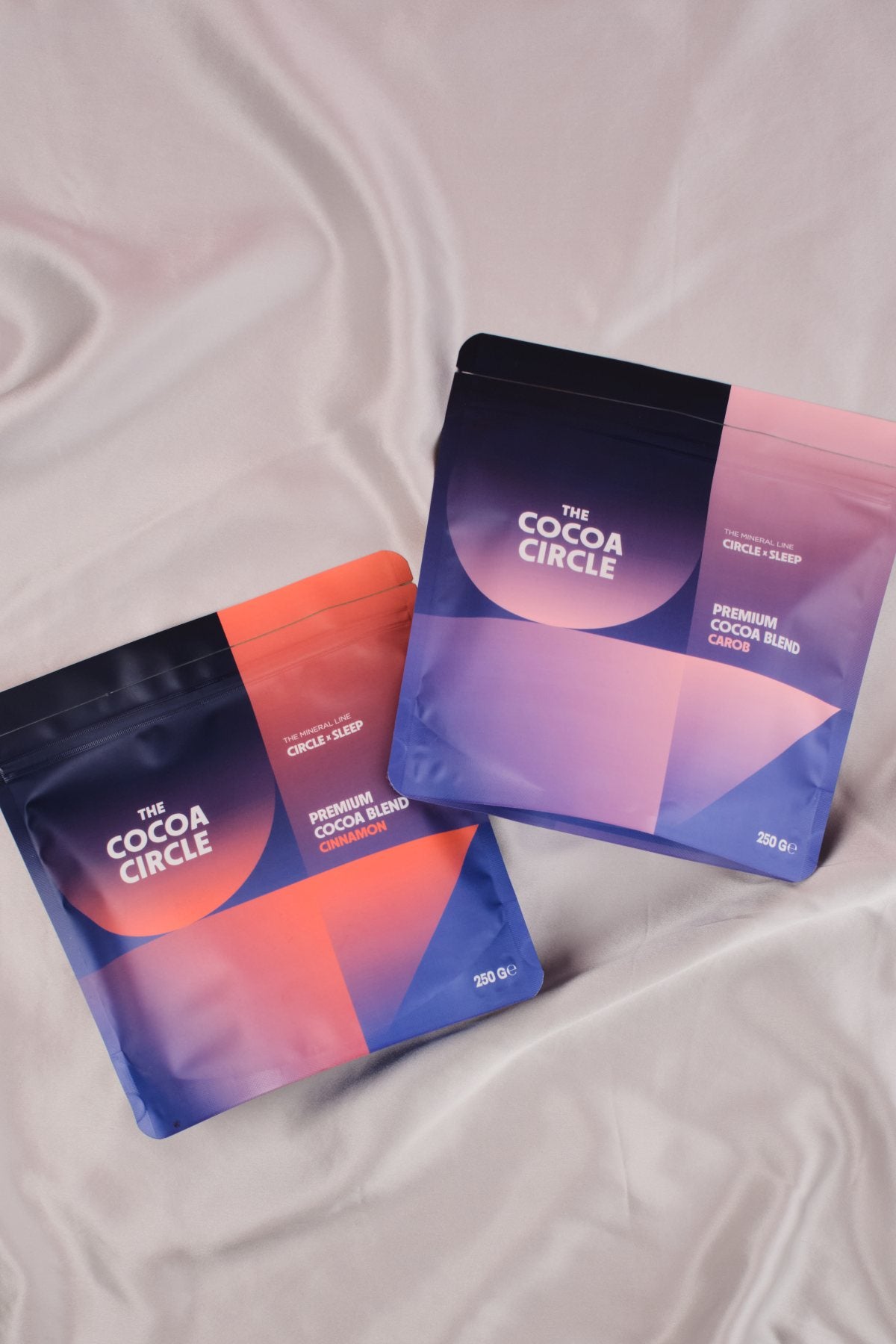
The Mineral line
Less than a cup of coffee. €1,66 a night.
Carob or cinnamon, about thirty evenings in every pouch.
-
Magnesium, L-theanine, reishi, apigenin
-
Naturally sweetened, no refined sugar
-
Tastes like hot chocolate, because it is
P.S. €49,95, thirty nights, and the first difference shows up in the mirror, not the invoice.