
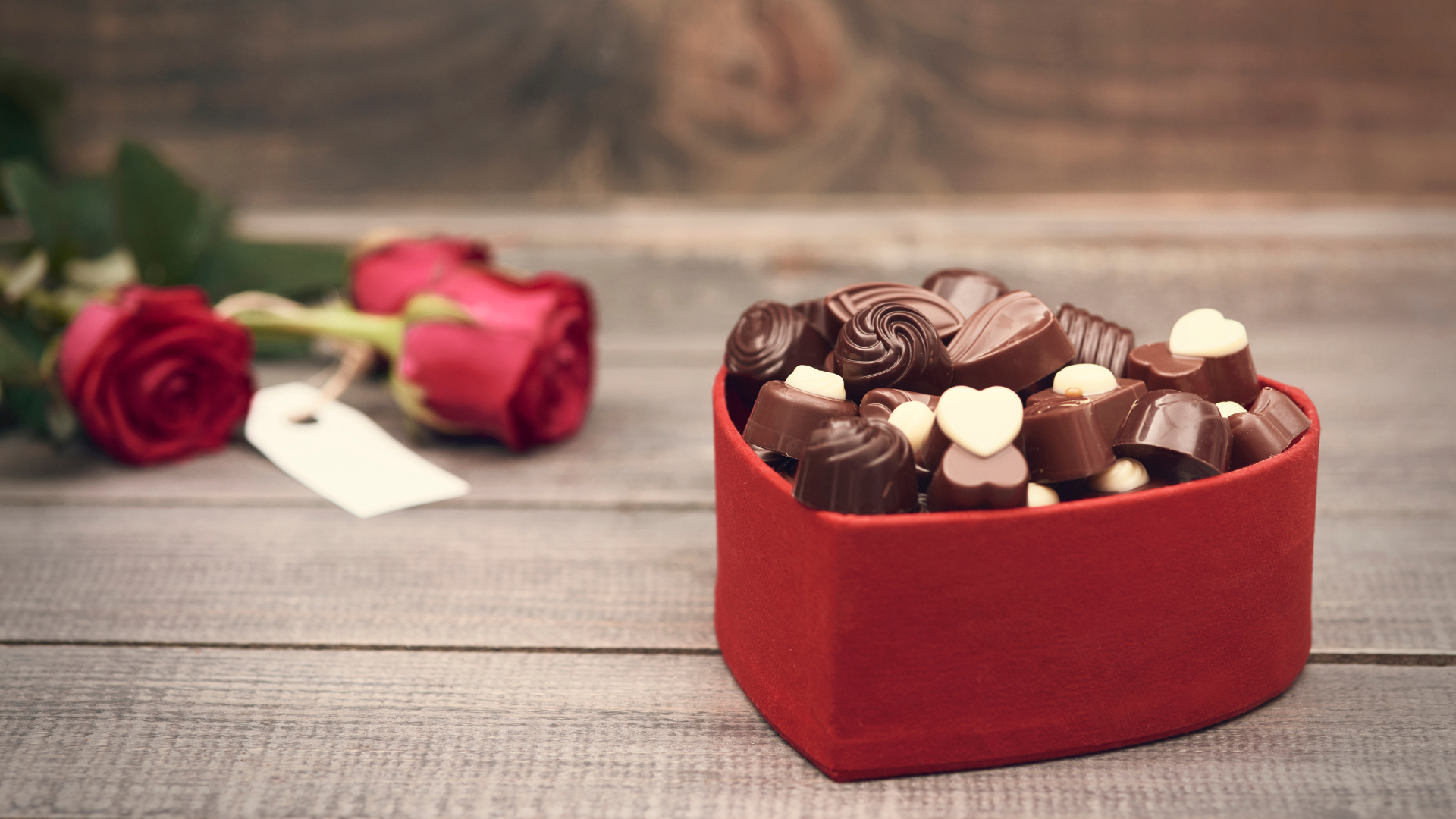
Gifting chocolate on Valentine’s Day has long been a tradition to show friends, family and lovers just how much we care. But where does this chocolate gifting ritual actually come from?
Every year, it seems that February hits and heart-shaped boxes become stacked like bricks in every store. Chocolate is… everywhere. We’re certainly not complaining, but it does raise the question: why give chocolate on Valentine’s Day?
The truth is, it started long before heart-shaped boxes, with ancient cacao rituals, romantic trends in Europe, and a little mood-boosting cocoa chemistry.
Let’s unwrap the story and see how we got here.
Chocolate and love go way back
Long before chocolate was a “treat”, cacao (the bean behind chocolate) was a symbol. In parts of ancient Mesoamerica, especially among cultures like the Maya, cacao was the ingredient behind all the important moments: community, ceremony, union.
Historians and archaeologists found ancient cacao and cacao ceremonies linked to wedding rituals and dowries, and shared as a drink during celebrations.
The Aztecs gave cacao a bit of a flirtier reputation. Cacao was seen as a “power drink”, linked with desire and energy, and Moctezuma II was later said to drink it as an aphrodisiac, especially during big feasts.
Long story short: cacao has never been just a treat. It’s always been about connection.
From sacred drink to romantic gift
Eventually, cacao made its way to Europe, and it came with a sense of mystery and status. It was expensive, unfamiliar, sweetened for local tastes, and served as a drink in high-status settings. Quickly, cocoa became a symbol of luxury and indulgence.
Then came the social scene. By the late 1600s, chocolate houses were popping up in England, places where people gathered to talk, gossip, debate, and generally linger with a cup in hand. These houses were fashionable meeting places: part café, part club, part “see and be seen.” Chocolate became a drink of wealth, conversation, and some good old-fashioned flirting.
So, in Europe, chocolate’s reputation shifted from sacred drink, to status symbol, to something you could offer as a bold gesture.
The science behind chocolate and attraction
And there’s more going on than just history. Chocolate even has a little chemistry on its side.
For starters, chocolate contains phenylethylamine (PEA), which people nicknamed “the love chemical”. So.. is chocolate basically a love potion? Sadly, no. The famous “love chemicals” in chocolate don’t show up in the body in a way that would turn it into Cupid’s secret weapon.
But that doesn’t mean that chocolate has nothing going on. Cocoa also contains natural mood-boosting compounds like theobromine (and a little caffeine), which can feel gently uplifting.
And honestly, a lot of the magic is simpler than science: chocolate is a full-body experience. It smells enticing, melts beautifully, and has a decadent, rich flavour that makes you slow down with every bite.
So the verdict? Chocolate doesn’t make you fall in love. It just helps you feel cosy, indulgent, and a little bit warm inside; which is basically Valentine’s Day in food form.
How Valentine’s Day and chocolate became linked
Here’s where it gets interesting: Valentine’s Day wasn’t always about romance.
One famous turning point comes from medieval poetry. Geoffrey Chaucer’s Parlement of Foules (late 1300s) describes birds gathering to choose their mates on St Valentine’s Day, and it’s often cited as an early link between St. Valentine’s Day and romantic pairing.
Fast-forward to the 1800s, and Valentine’s Day becomes more commercial: cards, gifts, and a growing culture of “prove it” with something cute.
Chocolate then slides in as the perfect gift: indulgent, emotional, and easy to wrap. In Victorian Britain, Cadbury helped cement the tradition by marketing decorated boxes of chocolates, including the now-iconic heart-shaped style associated with Valentine’s gifting.
And from there, the connection clicked for good: romance + ritual + a gift you can eat.
Why homemade chocolate feels even more meaningful
Here’s the part no heart-shaped box can beat: effort. Making something chocolatey at home says: “I thought about you.” “I gave you my time.” “I risked doing dishes for you.” (True love, honestly.)
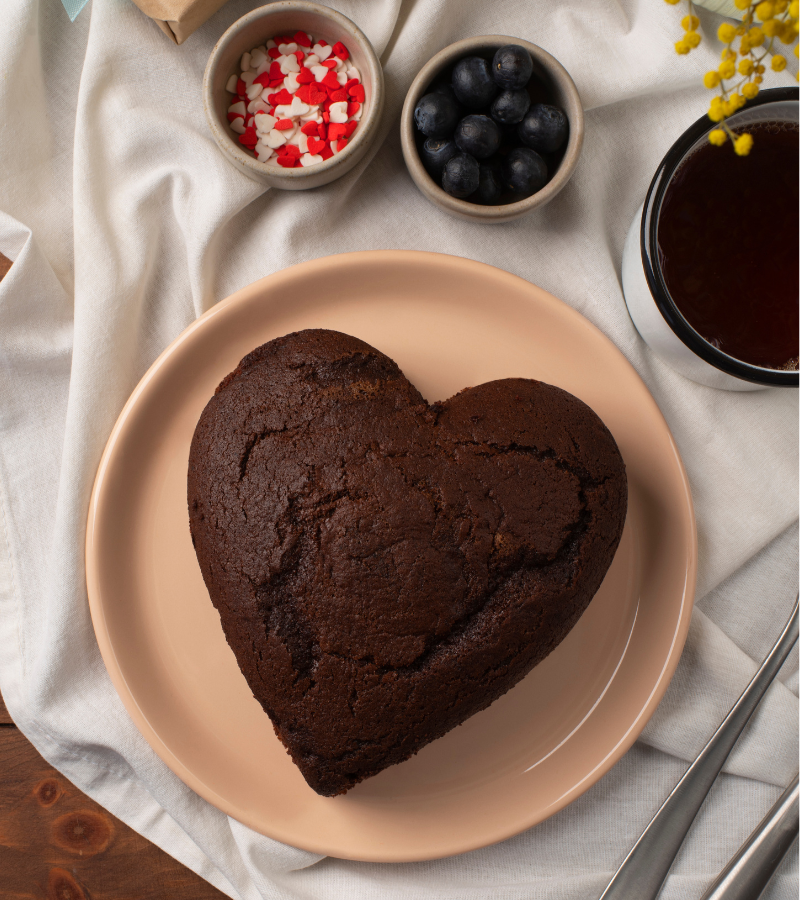
Buying chocolate is nice, but baking something chocolatey is truly personal. And it doesn’t have to be complicated. A simple batch of fudgy brownies, some truffles rolled with sticky hands. That’s the good stuff.
Chocolate as a modern love ritual
If cacao’s earliest story was about ceremony and connection, the modern version does not have to be a once-a-year scramble for the shiniest heart-shaped box.
It can be smaller, slower, and more personal: a proper hot chocolate on a Friday night, whisked and frothed and sipped like you’ve got nowhere else to be. A shared bake with someone you love, partner, friend, flatmate, kids, or the person who insists they “don’t have a sweet tooth” and then mysteriously appears when the brownies cool. Or, a tradition you repeat because it makes ordinary days feel a bit more special.
Chocolate works as a love symbol because it’s made for sharing!
More than a Valentine’s Day tradition
So, why do we give chocolate on Valentine’s Day?
Because cacao has always been meaningful. If we had to put it on a timeline: ancient cultures treated cacao like something sacred and social, poets helped romanticise the day, Victorians turned gifting into a big thing, and we’ve kept the tradition going because it still does the job.
At the end of it all, chocolate is one of the simplest ways to say: I’m thinking of you. Now let’s share something sweet.
Love is better when it’s made by hand. This Valentine’s Day, feel free to skip the pressure and make a little chocolate moment instead, even if it’s just a simple bake with two spoons in one bowl (bonus points if it’s messy). Explore our recipe collection for instant inspo.


